

Precious metals are tangible assets and can play a role in some retirement portfolios. But they’re not right for everyone. Before you put any money into gold, silver, platinum or palladium, it’s important to consider the pros and cons of a precious metals IRA or other investment in precious metals.
Why Investors Consider Metals
Most retirement portfolios consist of stocks, bonds, mutual funds and cash equivalents. While these assets can provide growth and/or income during your retirement, they may also be susceptible to losses during times of economic uncertainty, changes in interest rates and inflation.
Some investors turn to precious metals as a potential hedge against inflation, economic or market uncertainty and/or a weakening U.S. dollar. Other reasons investors own precious metals include:
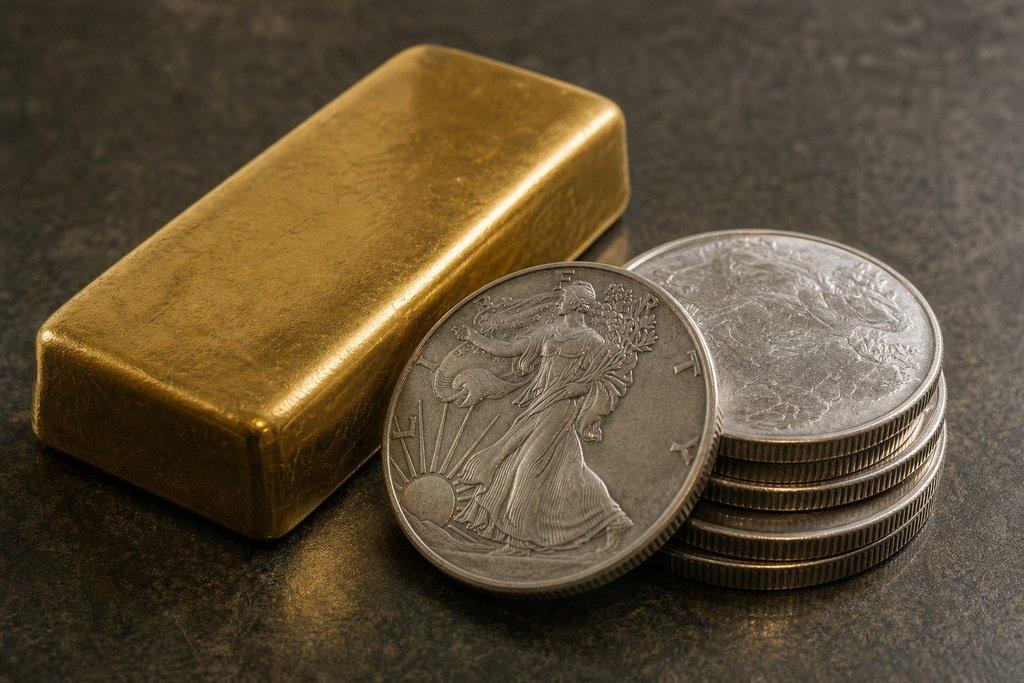
- Precious metals are tangible assets, unlike stocks and bonds, which represent a portion of ownership in or a loan to a business or other entity.
- Gold and silver have been used as stores of value for thousands of years.
- Adding precious metals to a retirement portfolio that’s primarily invested in stocks, bonds and other “paper” assets can provide diversification.
It’s important to note that diversification doesn’t mean insurance against declines. Precious metals don’t pay dividends or interest, and their prices can be just as (if not more) volatile than stocks. Ultimately, the value of any investment asset is only what another investor is willing to pay for it.
IRAs and Other Ways to Invest in Metals
Aside from IRAs, there are a few ways investors gain exposure to precious metals:
- Purchase coins or bars and store them yourself
- Invest in exchange-traded funds or mutual funds focused on precious metals
- Buy stocks of companies that mine for or manufacture products using precious metals
Each type of precious metals investment has its own set of pros and cons. For example, while mutual funds focused on precious metals may be easy to buy and sell, you won’t actually own any of the asset. On the other hand, precious metals stocks are exposed to the management, costs and operations of the company. If you purchase coins or bars, you’ll actually own the asset, but you’ll also have to figure out how to store and insure it.
If you add precious metals to your retirement portfolio, they likely must be held by a special type of IRA known as a self-directed IRA. With this type of account, the metals must be held by a custodian and stored in an approved facility, so you can’t take possession of the metals yourself without incurring a potentially taxable distribution from your IRA.
What Should You Ask Before Investing?
Before you make any precious metals investment, make sure you understand all of the costs involved. Don’t just look at the spot price of the metal, as that’s almost never what you’ll pay. Make sure you understand:
- What premium you’ll pay over the spot price
- Any commissions or markups you’ll pay your dealer
- Shipping and handling costs, if applicable
- Any fees you’ll pay to set up and administer your IRA
- Any fees you’ll pay to store and insure your metals
- What, if any, buyback options you’ll have and at what price you could expect to sell your metals back
Generally speaking, the narrower the spread between the price you pay and what you could realistically expect to sell the metals for, the better. While there’s nothing wrong with owning collectible coins with high premiums if you’re a numismatics buff, they may not be the best option if your primary goal is to add some diversification to your retirement portfolio.
Finally, keep in mind that precious metals IRAs are just that, IRAs. If all you’re looking for is a small hedge in your portfolio, a self-directed IRA to hold your precious metals may be overkill. Depending on your situation, you may be better off with a small, straightforward investment in coins or bars, or even a low-cost mutual fund focused on precious metals.
Researching a Precious Metals Dealer
Before investing with any financial services provider, it’s important to do your homework (and Goldco has a company-specific review record to examine). Don’t let glossy websites, flashy TV commercials or limited-time offers sway you, and treat researching a precious metals dealer the same way you would any other financial services provider.
- How much am I paying above the market price for the metals?
- What fees will I pay, and which (if any) will I pay on an ongoing basis?
- Who will be holding my metals, and where will they be stored?
- Will I have the option to have my metals stored on a segregated basis?
- If I want to sell my metals in the future, what steps will I need to take, and how long of a process can I expect?
- Does the company have a buyback policy? If so, is it in writing, and how will the buyback price be determined?

Balance, Liquidity and Due Diligence
Precious metals may provide some peace of mind as a tangible asset, but don’t forget that your retirement account should still align with your overall risk tolerance, timeline, income needs and liquidity requirements. If you’re already retired and counting on your savings to provide you with a reliable income stream, you may need some of that money to be readily accessible to cover day-to-day expenses. If you’re still years away from retirement, on the other hand, long-term growth may be more important to you.
This is where diversification can help. Even assets that are thought of as defensive investments can introduce risk into your portfolio if you invest too heavily in any one asset class. And while no one can predict with certainty how different asset classes will perform in any given year, diversification can help protect you from putting all your eggs in one basket.
Due Diligence Before a Purchase
Rather than making an investment based on a hunch or gut feeling about how the market may perform in the near future, make sure you understand the costs, storage and other logistics involved with purchasing precious metals and how an investment might fit within your broader financial picture.
Before sending any money to a precious metals dealer, ask for a detailed, itemized quote for your purchase and a written description of the steps you would take to sell your metals in the future.